
For many members of Generation Z, some of the most memorable video game stories weren’t experienced through a controller; they were experienced through a YouTube video.
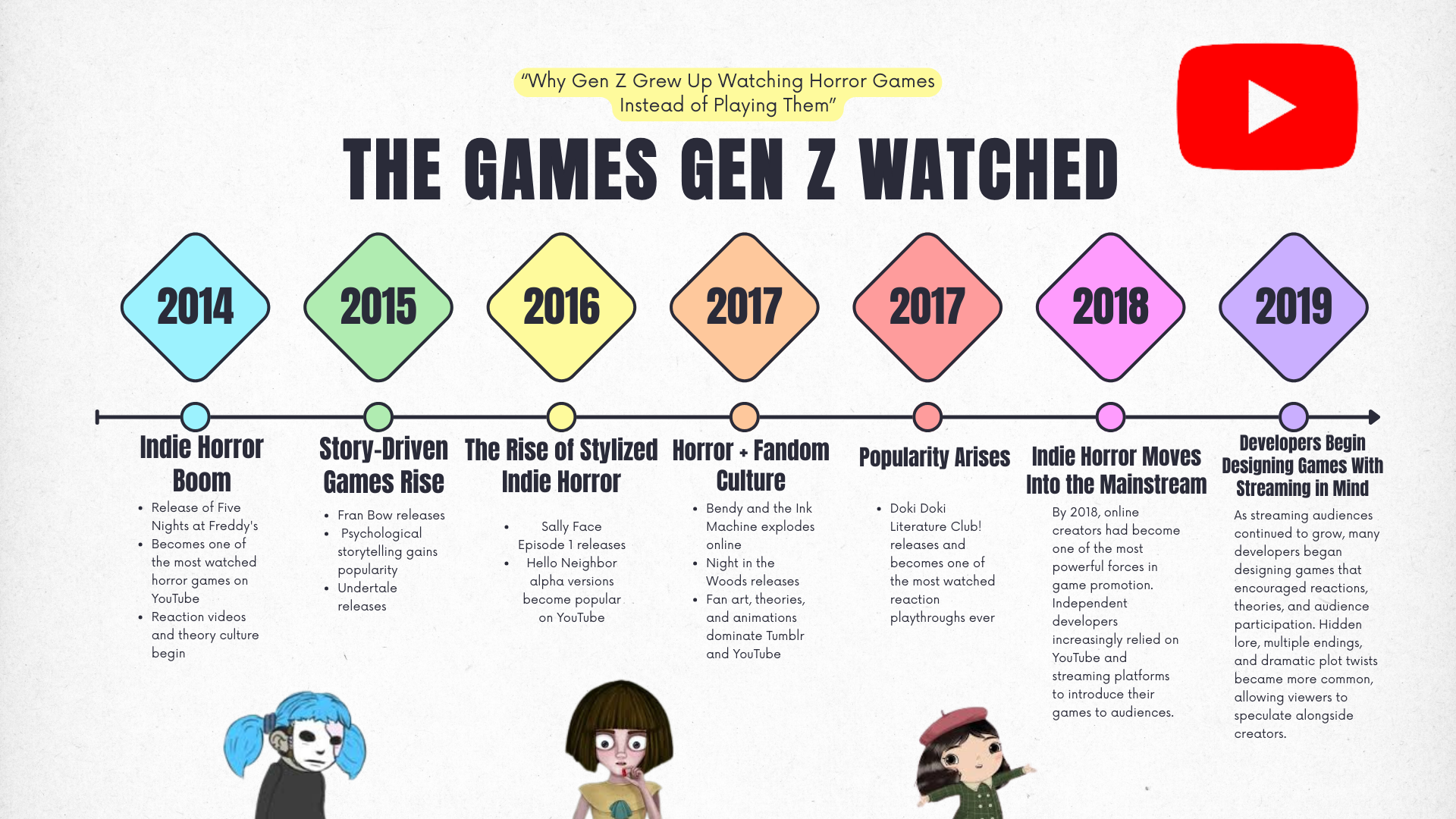
Throughout the mid-2010s, a wave of horror indie games, titles like Fran Bow, Sally Face, and Little Misfortune, took over the platform. Millions of viewers watched creators react to environments, storylines, and shocking twists. Many of those viewers never played the games themselves. Instead, they watched someone else play them. For Gen Z, this wasn’t unusual. Watching horror games became part of growing up online.
During the 2010s, gaming videos on YouTube exploded in popularity. Creators like Markiplier, Jacksepticeye, and PewDiePie built massive audiences by recording themselves playing games and reacting in real time.
These videos, often called “Let’s Plays,” turned video games into something closer to episodic entertainment. A creator might upload one section of a game per video, leaving viewers waiting for the next part, just like they would with a television series.
Horror games were especially suited for this format. The tension, jump scares, and creator engagement created strong reactions, which is exactly the kind of content that thrived on YouTube. Watching someone scream, laugh, or theorize about a plot twist became part of the experience.
For many young viewers in the mid-2010s, actually playing these games wasn’t always possible. Most indie titles were distributed digitally through platforms like Steam, which required a computer capable of running them. Younger audiences often didn’t have access to gaming PCs or the money to buy multiple indie games; YouTube removed that barrier. By watching a playthrough, viewers could experience the entire story for free. A single creator could effectively introduce millions of people to a game, turning what might have been a niche indie release into an online phenomenon. In some cases, watching became the primary way the story was consumed.
The indie horror games popular during this period also stood apart from traditional horror titles. Instead of focusing only on jump scares, many of them centered on story and atmosphere. Games like Fran Bow explored themes of trauma and mental illness through surreal imagery, while Sally Face followed a masked teenager uncovering dark secrets surrounding his apartment complex. Even titles outside the traditional horror genre, such as Night in the Woods, mixed unsettling elements with emotional storytelling. These narratives resonated with younger audiences (especially those with unlimited internet access) who were drawn to stories that felt darker, stranger, and more emotionally unique than many mainstream games. Because these titles were heavily narrative-driven, watching them often felt similar to watching a movie.
YouTube didn’t just change how people consumed games; it also changed how they talked about them. Viewers gathered in comment sections and online forums to share theories and analyze symbolism. Entire fandoms grew around indie titles that might otherwise have remained relatively small. Games like Five Nights at Freddy’s and Bendy and the Ink Machine became cultural phenomena largely because of YouTube playthroughs and the communities that formed around them. Fan art, animations, and theory videos spread across the internet, turning these games into collaborative storytelling experiences between developers, creators, and viewers.
For Gen Z, the distinction between playing and watching games blurred. Watching someone play became its own form of entertainment, one shaped by the personality of the creator and the reactions they brought to the story. The game itself was only part of the experience. In many ways, YouTube transformed video games into shared narratives. Instead of sitting alone in front of a screen, millions of viewers experienced these stories together, reacting to the same moments and discussing them online. Years later, many Gen Z viewers can still recall the twists, characters, and eerie art styles of games they never actually played. Because for a generation raised online, horror games weren’t just something you played, they were something you grew a community on.