
Hancock County Schools’ financial situation is one of many examples of the rapidly declining public school system. Many financial emergencies across West Virginia and its school districts have raised concerns about school funding across West Virginia. As the State Board of Education meets on Wednesday, January 14, Randolph County is on the agenda, prompting questions about whether Randolph County needs state intervention.
In late December, Hancock County officials disclosed they may not be able to meet payroll as early as February. State lawmakers and the Department of Education have since confirmed the district faces a multi-million dollar shortfall driven by a combination of declining enrollment, staffing levels that exceed state funding formulas, and the expiration of COVID-19 relief funding. The county has requested emergency state aid to cover short-term operating costs.
ESSER, Rising Financial Stress
Though the situation in Hancock accelerated in recent months, the financial stress did not appear overnight. Student enrollment in the northern panhandle county has fallen steadily, which reduces state aid related to population. Despite those losses, the district retained more staff positions than the formula supports, relying on federal COVID-19 funds, Elementary and Secondary School Emergency Relief (ESSER), to fill gaps.
When those pandemic funds expired last year, recurring costs remained, but the revenue did not. State lawmakers have also raised concerns about the county’s local budgeting practices and financial reporting.
While Hancock’s circumstances are uniquely severe, the underlying pressures are not. School enrollments have fallen for decades throughout West Virginia as families move for jobs, demographics shift, and the population shrinks. Because state aid is calculated per student, districts where enrollments are falling either cut staff or absorb the higher costs locally through levies and reserves.
Randolph Faces Long-Term Challenges Amid Declining Enrollment
Randolph County, which does not have a levy, like many other locations in the state, has been dealing with enrollment trends and operating in an area that has seen economic and demographic shifts much faster than its funding formulas can keep up with. Whether Randolph County has been relying on federal dollars due to the pandemic remains a question.
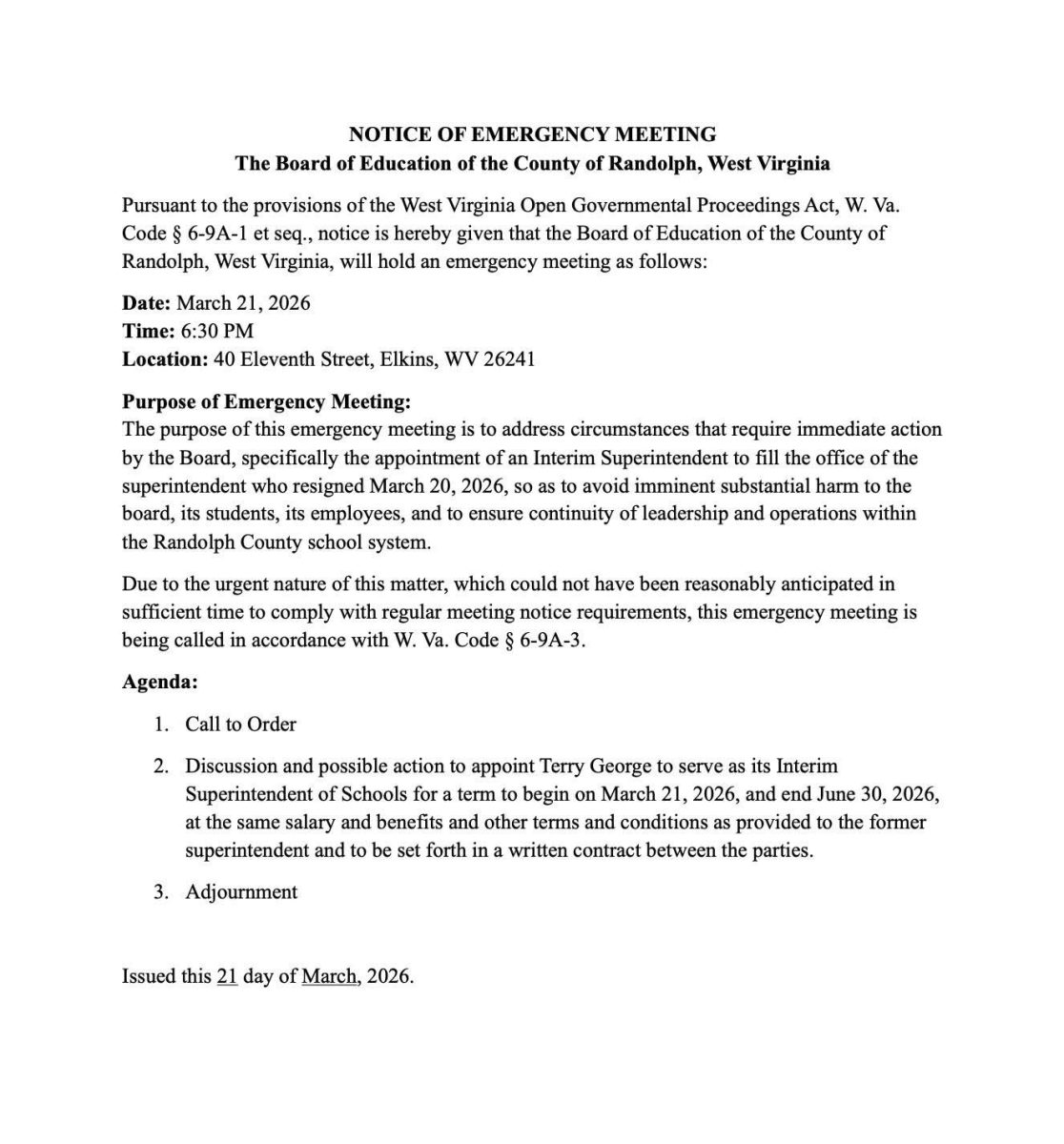
Through reduction-in-force hearings and transfer proceedings, starting in the spring of 2025, the Randolph County Board of Education moved to cut positions for budget balancing. Staffing in the district had outgrown state funding allocations, particularly with federal relief dollars drying up and falling enrollment further reducing the state aid the county received. Last year in March, Randolph faced a projected budget shortfall of about $2.8 million for the year 2025. Student enrollment dropped significantly over recent years, from over 4,000 in the 2017–18 school year to under 3,500 by 2024–25. At the same time, thousands of students statewide, including in Randolph, have opted for homeschooling or private choice programs such as the Hope Scholarship, further reducing public school counts and funding. In June 2025, the West Virginia Board of Education declared a state of emergency for Randolph County Schools. That six-month designation directs state and local officials to work together on a comprehensive plan to address financial deficiencies, including developing a balanced budget and tackling staffing and operational issues.
Randolph’s challenges are more long-term, structural, and incremental, tied to demographic shifts, funding formula limits, and difficult local decision-making about personnel and school buildings.
The crisis for Hancock, however, involves a more acute shortfall in which payroll is at risk now, and state leaders have pointed to budget mismanagement and reporting issues in addition to enrollment and funding formula problems. But both counties face the same pressures of declining enrollment, funding tied to the student count, and limited flexibility when one-time funds disappear.
Now Is The Time To Watch And Understand . . . But What Comes Next?
The State Board meeting is open to the general public and can be watched on live stream at the West Virginia Department of Education website. The citizens, parents, and professionals of Randolph County who wish to have a clearer understanding of where their schools are headed can listen and watch while decisions are being made.