
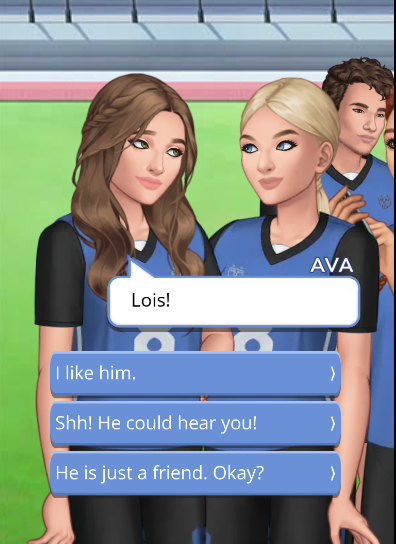
Recently, as a response to the growing concerns of cyber safety, the WV BOE has implemented Skyll, which is designed with internet literacy and teen safety in mind. Rather than traditional lectures or handouts, Skyll attempts to engage students with “movie game” scenarios where they play the central character and make choices that influence the narrative, which is supposed to help them learn real-world lessons about online behavior, consequences, and safety. These scenarios address issues like scams, cyberbullying, sextortion, misinformation, and dangerous online interactions.
By simulating realistic situations and prompting reflection after each scenario, Skyll aims to build students’ judgment, empathy, and digital resilience. Skyll’s entry into West Virginia schools began with a pilot at Nitro High School.
On October 24, 2025, Nitro became the first high school in the state to launch the Skyll online safety curriculum as part of a statewide initiative. In that initial rollout, students used the Skyll platform to explore interactive lessons that align with the federally mandated Children’s Internet Protection Act (CIPA). Feedback from Nitro students was positive, with many commenting that they felt “more aware” of online risks and more thoughtful about actions like sharing personal information or responding to conflicts online. However, many students at Elkins High School have expressed that the game is impractical and does not address serious topics in an effective way.
Some students have drawn parallels to the very popular game Episode because of its interface and format, which undercuts the seriousness of Skyll. Our team has reached out to Episode and Graeme Page for comment about the similarities and is waiting for a response.
The Skyll program was developed by Graeme Page, the CEO and co-founder of Skyll, who has been a “vocal advocate” for equipping people with the skills to navigate digital challenges safely, as described on his website.
While Skyll aims to address serious issues surrounding online safety, its long-term impact at Elkins High School remains to be seen. As students and staff continue to use the program, questions about its effectiveness, tone, and overall value in a high school setting are still part of the conversation.







Emily Elizabeth Thomas of George Washington High School in Charleston, WV • Apr 21, 2026 at 9:32 am
As a student of the now many schools that have adopted this program, I agree with the sentiment mentioned in this article of Skyll being ineffective and mockingly unserious. I write this in class, as my freshman classmates go through the “movie game”. Students skip through dialogue without reading it, laugh about the over-the-top presentation, actively go towards bad outcomes to see what happens, and overall mock the schooling body for implementing this. The teacher as well, is exasperated about being mandated to use this. These are extremely serious topics and the cartoonish, unprofessional depictions actively harm the programs ability to inform about these topics. If sexual extortion, stalking, child predation, and other serious scenarios are presented as a game while you are trying to teach these harrowing situations, they will be treated and seen as a game. On unprofessionalism within Skyll, the excessive AI generated visuals also are subject of ridicule and have been an immediate target of mockery. It’s ludicrous resemblance to Episode is also seen similarly. Are we so inept in our education that we have to lazily rewrite a mobile game, explicitly made for the goal of entertainment, for the education of our teens on how to avoid exploitation online? I am extremely disappointed in the education system for this poor quality, lazy, and ineffective teaching. The reaction I see currently is of confusion, bewilderment, and, as I’ve said, mockery. The majority of what I hear is laughter, confused “What?”s, and students telling each other the right choices to click so they can get through it quicker.